


Botanical Interests
Navajo Yellow Cantaloupe/Muskmelon Melon Seeds
Navajo Yellow Cantaloupe/Muskmelon Melon Seeds
Cucumis melo
Members save $0.26
Not a member? Join today. Sale Sold out27 seeds
Free shipping on orders over $79
Product Details
Product Details


Your hardiness zone is
- Variety Info
- Sowing Info
- Growing Info
Variety Info
Days to Maturity: 85 days
Family: Cucurbitaceae
Type: Cantaloupe (Learn more)
Native: Africa, Asia, Australia, West Pacific Islands
Hardiness: Frost-sensitive annual
Exposure: Full Sun
Plant Dimensions: Sprawling vine; average 6', but can be more
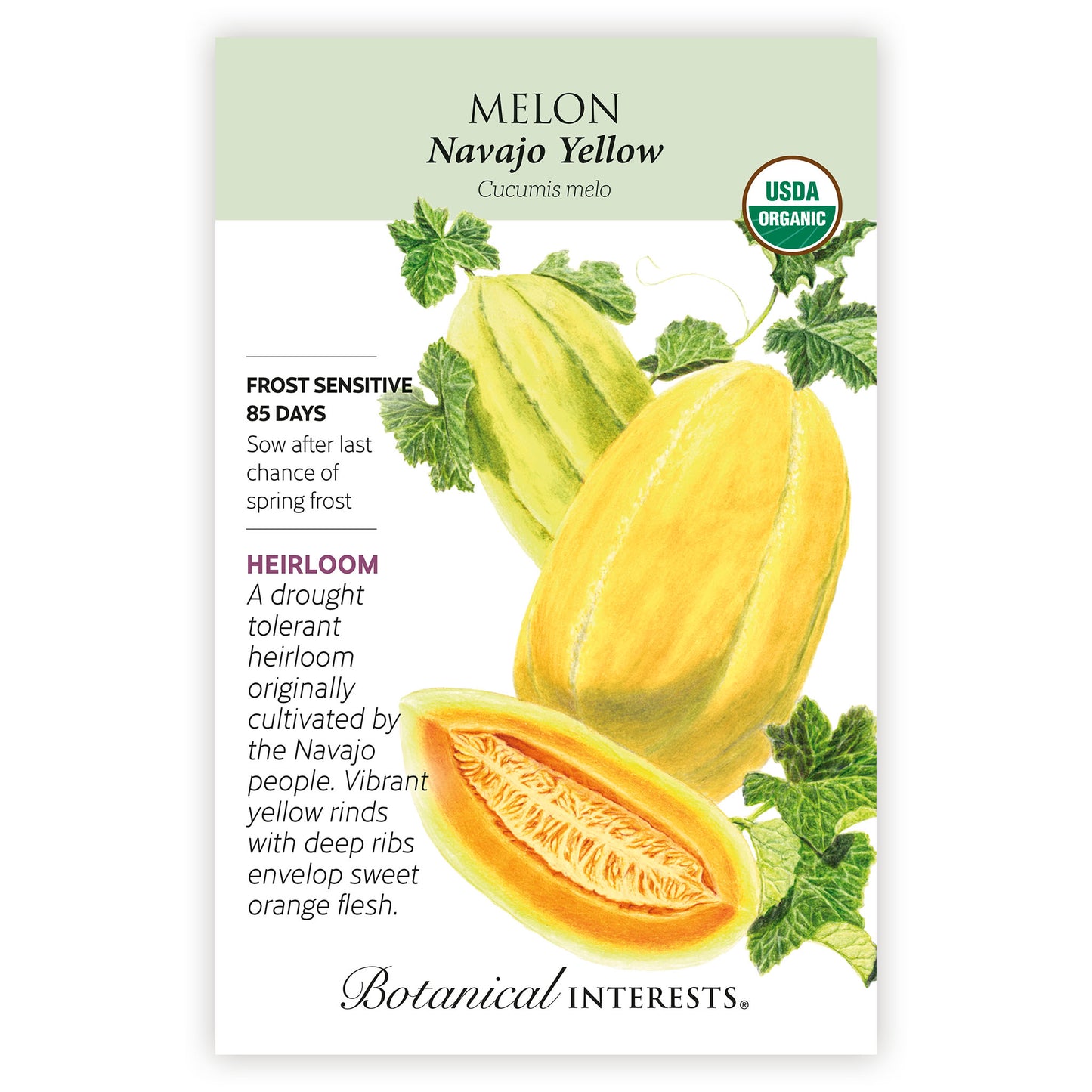
Variety Info: Fruits weigh 3–7 pounds on average reaching approximately 8" long and 6" wide. Rind is yellow, thin, and is patterned with large ribs. Flesh is orange and sweet.
Attributes: Frost Sensitive
Sowing Info
When to Sow Outside: RECOMMENDED. 1 to 2 weeks after your average last frost date, and when soil temperature is 70°–90°F.
When to Start Inside: Recommended for short-season areas. 2 to 4 weeks before transplanting within 2 weeks after your average last frost date. Sow into biodegradable pots that can be directly planted in the ground; roots are sensitive to disturbance.
Sprouts in: 5 – 10 Days
Plant Seeds (Depth): 1/4"
Space Seeds: 2 ‒ 3 seeds per mound
Row Spacing: 4' ‒ 6' apart
Thinning: Thin to 1 plant per mound
Growing Info
Harvesting: It can be tricky to know exactly when a melon is ripe and ready to pick. First, know the number of “days to harvest” and begin checking fruits as harvest date draws closer. Signs to look for in Navajo Yellow melons: (1) the skin has turned from green to yellow; (2) the surface color of the fruit turns dull; (3) light green, curly tendril on the stem near the point of attachment of the melon is brown and dry (4) vines easily "slip" away when fruit is gently twisted, releasing the fruit. All of these indicators may not necessarily occur at the same time. After harvesting, melons continue to ripen for a couple of days when stored correctly.
Special Care: The sweetest melons grow during long, hot summers. In cool areas, you can use floating row covers and weed barrier or black plastic sheeting to help to warm the soil. Mulching with straw or compost will help to retain moisture, and keep developing fruits off the soil, preventing fruit rot. Melons can also be grown on a trellis, and when fruits begin to appear, support them with a fabric sling, such as knee-high nylons. The key to a sweet melon is lots of sugar, which is produced by the leaves, so anything that hurts the leaves, also hurts the quality of the fruit.
- Melissa R.Verified BuyerRated 5 out of 5 starsJul 20, 2026Excellent seed collection!
I planted these seeds same day I got them in the mail and 3-4 days later they germinated! Ty!!
Which best describes you as a gardener? IntermediateEGEpic GardeningJul 21, 2026Hey Melissa,
We're so happy to hear about your fantastic experience with the Navajo Yellow Cantaloupe Seeds! It's awesome that you got them planted right away and saw such quick germination in just 3-4 days - that's exactly what we love to see with these beauties! Your Navajo Yellow melons are going to give you such incredible sweet flavor once they're ready to harvest! Thanks for sharing your cantaloupe growing success with us! Keep on growing 🌻️
