







Botanical Interests
Members save $0.44
Not a member? Join today. Sale Sold out50 seeds
Free shipping on orders over $79
Product Details
Product Details


Your hardiness zone is
- Variety Info
- Sowing Info
- Growing Info
Variety Info
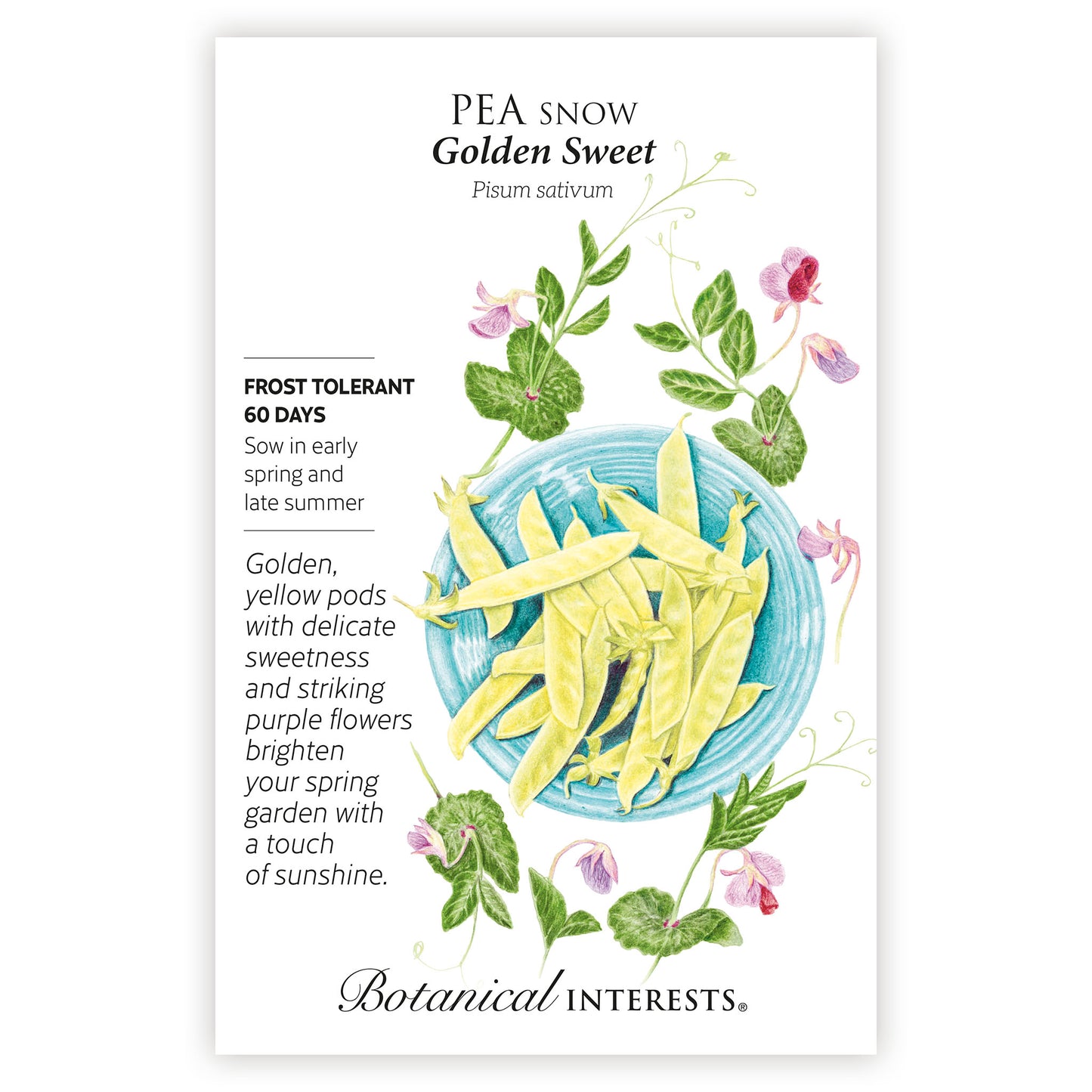
Days to Maturity: 60 days
Family: Fabaceae
Type: Snow Pea (Learn more)
Native: Western Asia, Europe, and North Africa
Hardiness: Frost-tolerant annual
Exposure: Full Sun
Plant Dimensions: Vines 6'–8' tall
Variety Info: 3"–3.5" long, pale, yellow pods on highly productive vines. Sweet and tender.
Attributes: Frost Tolerant
Sowing Info
When to Sow Outside: RECOMMENDED. 4 to 6 weeks before your average last frost date, when soil temperature is at least 40°F, ideally 60°–80°F, and again 10 to 12 weeks before your average first frost date. In mild climates, sow in fall or winter for winter harvest. Best grown in temperatures less than 85°F.
When to Start Inside: Not recommended.
Sprouts in: 5 – 10 Days
Plant Seeds (Depth): 1"
Space Seeds: 2"
Row Spacing: 18"
Thinning: Not required
Growing Info
Harvesting: Snow peas should be picked before the seeds start to form. Peas that are too mature are tough and will cause the plant to stop producing; therefore, harvest regularly when pods are at their peak. Use scissors to harvest or hold vine with one hand and pick the pods with the other; vines are fragile.
Special Care: Supporting even short vines (under 3') on a fence or trellis makes harvesting easier. Short-vined peas may also be grown in mounds on the ground with row spacing at 24"–36" (mounds are not recommended for tall/vining types). Roots must stay cool; when temperatures begin to warm, mulch soil surface to keep them cool. Powdery mildew looks like a white powder on leaves, and thrives in weather with high relative humidity and cool nights. Reduce chances of this disease by watering only in the morning and during the day. Keep leaves dry; do not water plants overhead. Provide good air circulation by proper plant spacing. Do not compost diseased plants; spores may over-winter and re-infect crops the following season. Powdery mildew is more common in the fall and choosing a resistant pea variety for fall sowing further reduces the likelihood of infection.
