Epic Gardening
Members save $9.99
Not a member? Join today. Sale Sold outFree shipping on orders over $79
Product Details
Product Details
The Calamondin (Citrus x microcarpa) is the ornamental citrus that earns its keep twice over — as a living decoration and as a kitchen workhorse. A natural cross between a kumquat and a mandarin, it produces a relentless crop of small, round fruit barely an inch across, ripening from green to a vivid tangerine-orange. The juice is sharply tart and sour — closer to a lime than a sweet orange — with an aromatic, edible peel that's faintly sweet. You don't eat these out of hand by the handful; you turn them into marmalade, splash them into drinks, and squeeze them over fish, rice, and stir-fries the way Filipino cooks have for generations, where the tree is a beloved staple called calamansi.
Glossy, evergreen, and rarely without color, the Calamondin Orange brings the look of a miniature fruiting tree and a steady supply of bright, sour fruit to a footprint as small as a tabletop pot — outdoors in mild regions, or indoors by a sunny window where winters turn cold.
All sales final. For any questions, please reach out to customer support for assistance.
30-Day Satisfaction Guarantee! We want your plants to arrive healthy and in good condition on every order, but if something doesn't look right we want to fix it! Our 30-Day Satisfaction Guarantee provides a window for all customers to reach out if there are any concerns with your order on live plants. Contact Customer Support and our team will review your concerns and, if necessary, provide you with a one-time replacement at no cost.
Why You'll Love It
Why You'll Love It
- Everbearing and endlessly ornamental. Unlike citrus that fruit in a single season, a mature Calamondin flowers and fruits more or less continuously, so the plant carries fragrant white blossoms, green fruit, and ripe orange fruit all at the same time.
- Astonishingly productive. Even a small, young plant can be studded with dozens of fruit — far heavier set than a lemon or lime of the same size.
- Among the hardiest ornamental citrus. The kumquat parentage gives it more cold tolerance than most container citrus, shrugging off brief chills that would damage a lime.
- Made for pots and indoor life. Naturally compact, slow-growing, and happy in a container, it's one of the easiest citrus to keep on a patio or in a bright room.
- A true cook's fruit. Intensely sour juice and a fragrant, usable peel make it brilliant for marmalade, marinades, calamansi juice, cocktails, and pickling — uses a grocery orange simply can't fill.
FAQ
FAQ
Q: What does a Calamondin taste like — can I eat it like an orange?
A: Not quite. Despite the name and the tangerine-orange color, the juice is sharply tart and sour, more like a lime than a sweet orange. The thin peel is fragrant and faintly sweet, so the whole fruit is edible, but most people find it too sour to eat plain by the handful. It shines instead in marmalade, calamansi juice, marinades, cocktails, and as a souring splash over fish, noodles, and rice.
Q: How is a Calamondin different from a regular orange or a lime?
A: It's a kumquat–mandarin cross, which makes it its own thing entirely. The fruit is tiny — about an inch round — and produced in huge, continuous quantity rather than in one seasonal flush. The flavor is intensely sour like a lime, but with a sweet, edible kumquat-style peel. And thanks to its kumquat parent, it's hardier and more compact than a lime tree, making it far better suited to pots and indoor growing.
Q: Can I grow it indoors or in a cold climate?
A: Yes — it's one of the best citrus for containers and indoor growing. Grow it outdoors year-round in zones 9–11, or anywhere in a pot that summers outside and winters indoors. It's among the hardier ornamental citrus and tolerates brief chills better than a lime, but it still needs protection from hard freezes. In cold regions, move it inside before the first frost and place it in your brightest window or under a grow light.
Q: How much fruit will it produce, and how often?
A: A lot, and nearly year-round. Calamondins are everbearing, so a healthy plant flowers and fruits more or less continuously — often carrying blossoms, green fruit, and ripe orange fruit all at once. Even a small, young plant can be loaded with dozens of fruit, which is part of why it's so prized as both an ornamental and a kitchen citrus.
Q: Do I need more than one plant to get fruit?
A: No. Calamondins are self-fertile, so a single plant will set fruit on its own. Outdoors, bees handle pollination; for indoor plants, gently transfer pollen from flower to flower with a small brush to improve fruit set during the months it lives inside.
Q: Why are the leaves turning yellow or dropping?
A: Yellowing usually traces back to watering or feeding. Soggy, poorly drained soil is the most common culprit, so let the top inch or two dry between waterings and make sure the pot drains freely. Pale leaves with green veins signal a micronutrient shortage — feed with a citrus fertilizer containing iron, zinc, and manganese. Some leaf drop after a move indoors or a seasonal change in light is normal and usually passes as the plant settles in.


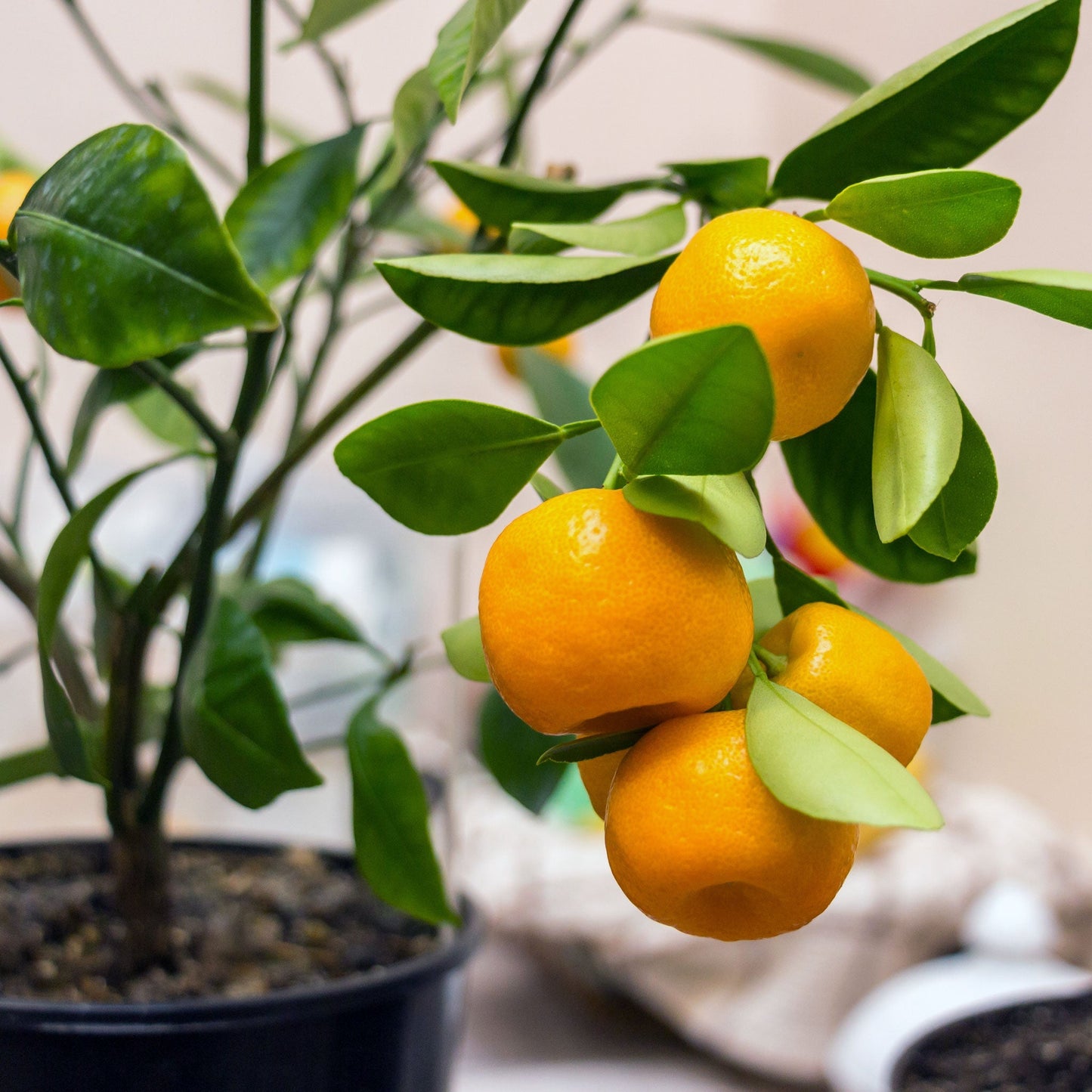
Calamondin Orange Bush
View More Planting Info
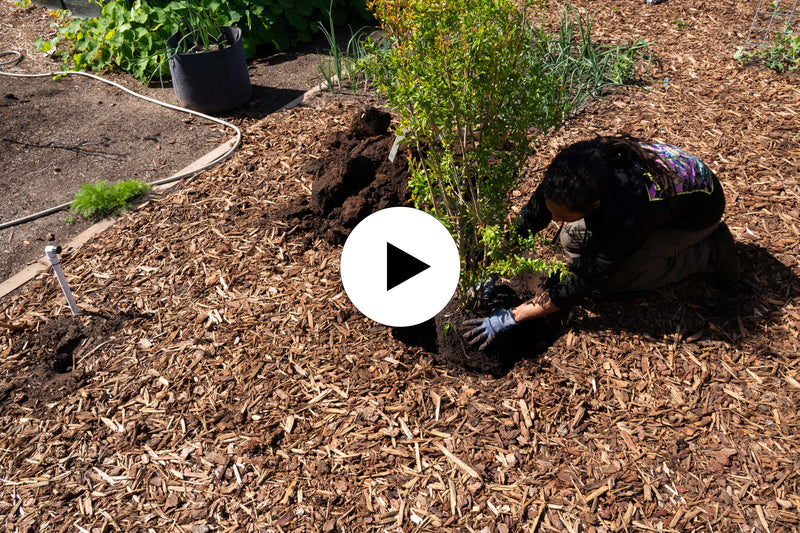
Calamondins grow in the ground in zones 9–11 and thrive in containers anywhere, moved indoors before the first frost in colder regions. Their kumquat heritage makes them more forgiving than most citrus, but a good start still pays off in years of nonstop fruit.
- Product Info
- Care and Maintenance
- Planting Care
- Growing Zone
Product Info
Mature Height: 3-6 ft.
Mature Width: 6-10 ft.
Sunlight: Full Sun
Does Not Ship To: AL, AZ, CA, FL, GA, OR, TX
Care and Maintenance
Watering: Keep the soil evenly moist but never waterlogged. Water deeply once the top inch or two feels dry — roughly weekly in the ground, every few days for pots in warm weather.
Pruning: Shape lightly in late winter to early spring, removing dead, crossing, or inward-growing branches and any shoots sprouting below the graft. The plant takes well to pruning if you want a tidy, rounded form.
Pests and Diseases: Inspect for aphids, scale, mealybugs, and spider mites, especially indoors in winter, and treat early with horticultural oil or insecticidal soap.
Pollination: Calamondins are self-fertile. Outdoors, bees do the work; indoors, dab flower to flower with a small brush to set more fruit.
Harvesting: Because the plant is everbearing, you'll pick fruit over a long stretch rather than all at once. Snip or twist off fruit when it has turned fully orange and yields slightly; fruit holds well on the tree, so harvest as you need it.
Planting Care
Sunlight: Give the plant at least 6–8 hours of direct sun. Indoors, a south- or west-facing window or a grow light keeps it flowering and fruiting.
Location: Choose a bright spot
Watering: Water thoroughly, then lay a 2–3 inch ring of mulch, kept a few inches away from the trunk.
Hardiness Zone: Calamondin Orange Bush is suitable for growing outdoors in USDA Zones 9-11. Calamondins are among the hardiest ornamental citrus and tolerate brief dips toward the high 20s°F better than limes, but they're not frost-proof. In cold zones, bring containers indoors before a hard freeze and give them the brightest spot you have.
Growing Zone
Growing Zone 8-11 outdoors

Fruit Trees & Bushes Delivered to Your Doorstep
Unpack, Plant and Grow!