







Botanical Interests
Pennsylvania Dutch Crookneck Winter Squash Seeds
Pennsylvania Dutch Crookneck Winter Squash Seeds
Cucurbita moschata
Members save $0.44
Not a member? Join today. Sale Sold out17 seeds
Free shipping on orders over $79
Product Details
Product Details


Your hardiness zone is
- Variety Info
- Sowing Info
- Growing Info
Variety Info
Days to Maturity: 105 days
Family: Cucurbitaceae
Type: Winter Squash (Learn more)
Native: Northern Columbia
Hardiness: Frost-sensitive annual
Exposure: Full Sun
Plant Dimensions: Vigorous vines 6'–8' in length
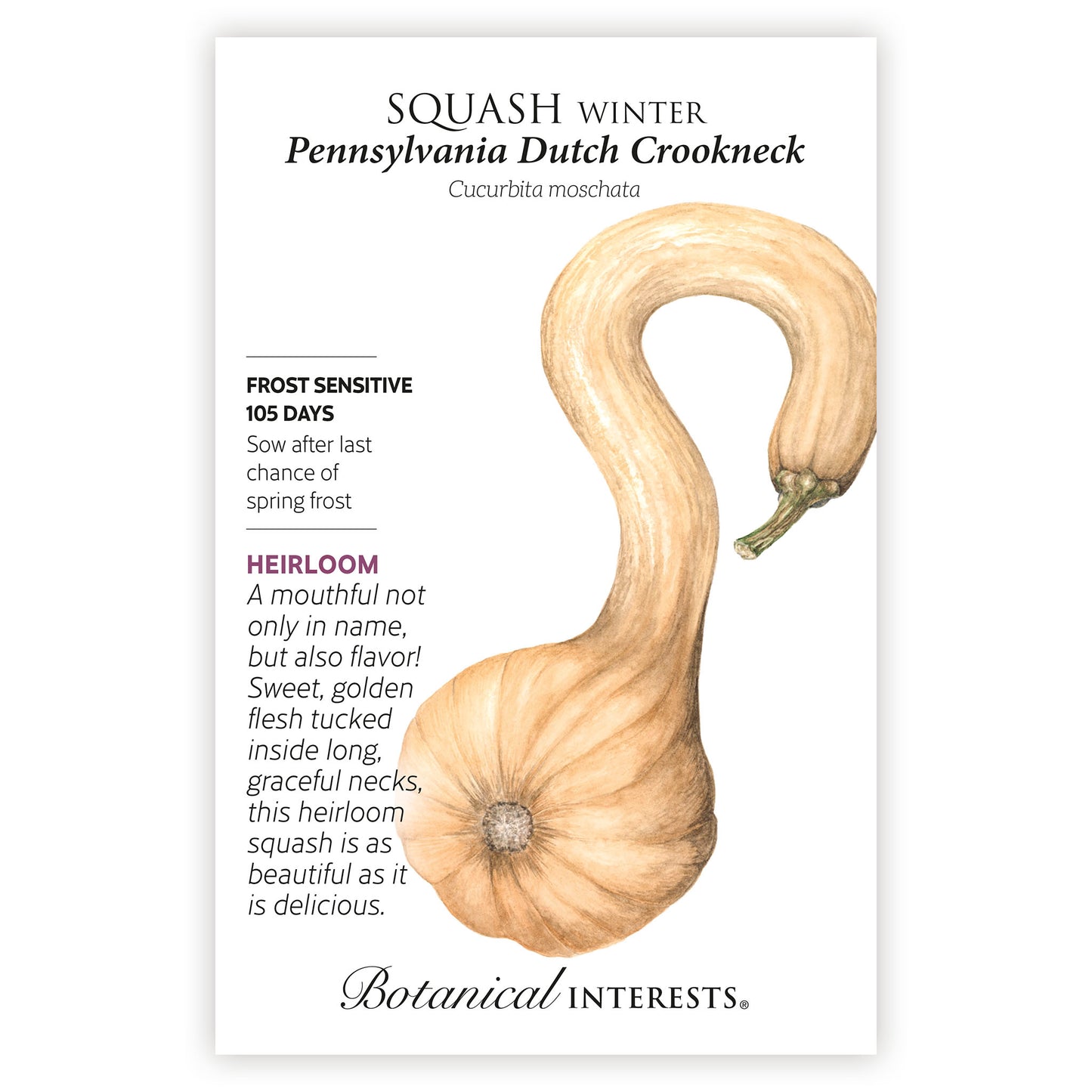
Variety Info: 10–20 lb fruits but can often get larger. Bowl is 6" in diameter with a 15"–18" neck. Light tan skin with yellowish-orange flesh.
Attributes: Frost Sensitive
Sowing Info
When to Sow Outside: RECOMMENDED. 1 to 2 weeks after your average last frost date, and when soil temperature is 70°‒85°F.
When to Start Inside: Not recommended except in very short growing seasons, 2 to 4 weeks before transplanting. Roots are sensitive to disturbance; sow in biodegradable pots that can be planted directly into the ground. Transplant when soil temperature is at least 60°F.
Sprouts in: 5 – 10 Days
Plant Seeds (Depth): 1/2" – 1"
Space Seeds: 2 – 3 seeds per mound
Row Spacing: 6'–8'
Thinning: When 3 leaves, thin to 1 ‒ 2 plants per mound
Growing Info
Harvesting: Harvest when the squash’s rind is hard enough that you can’t dent it with your fingernail and before first frost. Cut stem, (don’t break it off) leaving 2" of stem attached, which keeps the squash whole, leaving no opening for infection. Though fruits are hard and may seem indestructible, treat them gently; bruising can spoil squash.
Special Care: To help protect plants against common pests like squash vine borer and cucumber beetles, use floating row covers, and remove covers when plants begin flowering. To further protect against vine borers, you can also cover the base of the stems near the ground with mulch, foil, or fabric material, as the base of the stem is where insect eggs are laid. Squash plants are susceptible to fungal disease, too, so make sure plants have ample space for air circulation. Sowing pollinator-attracting plants near squash can assist in proper pollination, resulting in a bigger harvest and well-shaped fruit.
