


Botanical Interests
Inchelium Red Softneck Garlic - USDA Certified Organic
Inchelium Red Softneck Garlic - USDA Certified Organic
1 Bulb
Free shipping on orders over $79
Product Details
Product Details
Garlic preorders are now sold out. More garlic is coming in late September or October. Check back this fall for the next release.
Cloves per bulb: 8-20
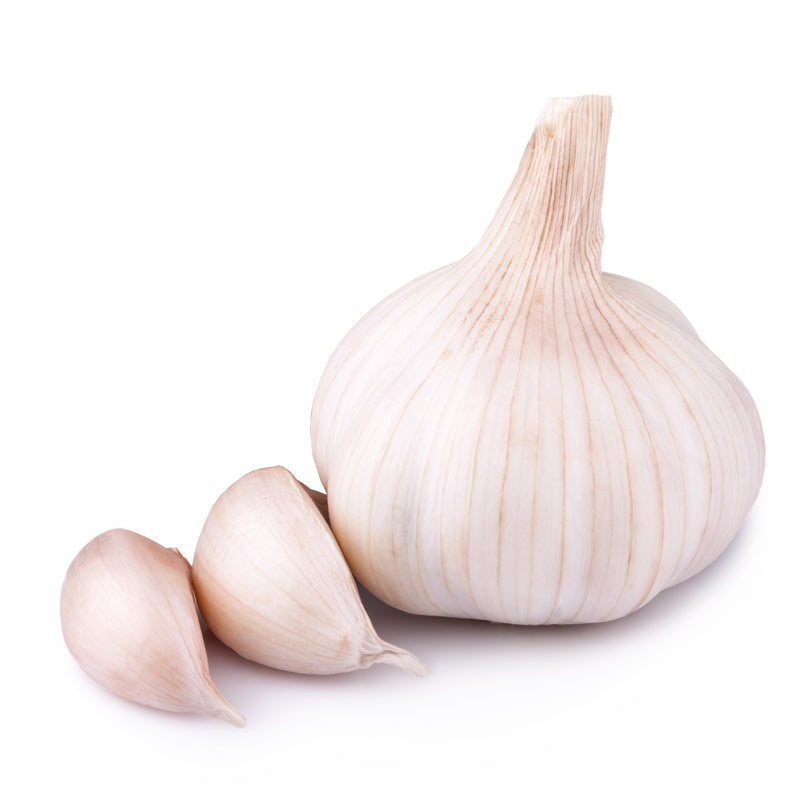
This large, beautiful garlic cultivar was discovered on the Colville Native American Reservation in Inchelium, Washington, but its initial origin is unknown. Its taste-test-winning flavor (Cook's Illustrated and Rodale Institute) has been described as robust and lingering but not overwhelmingly spicy. Matures in mid-season and may take a little longer to cure due to its large size. Large white and purple-blotched bulbs have 8–20 cloves arranged in layers. Stores up to 10 months.
Due to state restrictions, we cannot ship garlic to Idaho, Hawaii, and the following counties in Washington—Adams, Benton, Franklin, Grant, and Klickitat (including cities such as Othello, Pasco, Moses Lake, Kennewick, and Richland). Please do not order garlic if you live in one of these locations.
We source our garlic from local farms, where passionate farmers hand-harvest each bulb. This commitment not only supports our community but also ensures top-notch quality and flavor in every product.
Specification
Specification
Learn More
Watch this Before You Plant Garlic
Softneck vs. Hardneck Garlic: What's the Difference?
How to Grow Garlic in Raised Beds: A Complete Guide
How to Plant, Grow, and Care for Garlic In Your Garden
Is It Too Late To Plant Garlic? A Zone-By-Zone Guide
15 Garlic-Growing Mistakes To Avoid This Year
When To Plant Fall Garlic For The Best Yields
Why You'll Love It
Why You'll Love It
Softnecks like Inchelium Red provide a lovely flavor unmatched by supermarket garlic while still producing well in warmer climates. This variety is perfect for the culinarily-minded gardener!
You may also like
.


Epic 4-Cell Seed Starting Trays
Members save $1.99


Epic Humidity Domes & Bottom Trays (6-Cell)
Members save $3.99
- Douglas R.Verified BuyerRated 5 out of 5 starsDec 2, 2025Great garlic!
First time using this seed garlic and so far I’m impressed. Every clove worked and sprouts are already showing after two weeks! Can’t wait for next summer.
EGEpic GardeningDec 2, 2025Hey Douglas,
Thank you so much for taking the time to share your experience with our Inchelium Red Softneck Garlic! We absolutely love hearing that every single clove worked for you - that's such fantastic feedback and exactly what we hope for with our USDA Certified Organic seed garlic! It's so exciting that you're already seeing sprouts after just two weeks, that's a great sign of healthy, vigorous garlic! We have a feeling next summer's harvest is going to be absolutely amazing. There's nothing quite like pulling up your own homegrown garlic bulbs! Thanks for sharing your growing success with us and please let us know how the harvest turns out. Keep on growing 🌻️
- Karen Hogan H.Verified BuyerRated 5 out of 5 starsDec 30, 20235 Stars
Again trying to see which dose best, in greenhouse or out in my regular garden so divided them up in half and planted both places. Both on the same sprout time, now 3 weeks later greenhouse is up a little taller but they both seem to be doing great. Very Happy with my purchase.
EGEpic GardeningJan 4, 2024Hey Karen, Thank you so much for sharing your photos and for sharing the current results of your experiment! I hope you'll keep us up to date on the final outcome! Keep on growing 🌻️
- Luisa H.Verified BuyerRated 5 out of 5 starsDec 28, 20235 Stars
This is our second year growing this garlic. It was so low maintenance to grow. We love and highly recommend this garlic!
- Tina D.Verified BuyerRated 5 out of 5 starsDec 28, 20235 Stars
I received some very nice, healthy looking garlic. After vernalizing for 8 weeks I planted them and they came up within a few days and look absolutely lovely. Every one of them has emerged from the soil :)
EGEpic GardeningJan 1, 2024Hey Tina, AWESOME photos. Thank you so much for sharing! We're so glad you're garlic is doing so well! Keep on growing 🌻️
- Jennifer G.Verified BuyerRated 5 out of 5 starsNov 11, 20235 Stars
Beautiful packaging. Out of four bulbs, I got 36 nice sized ones to go into the main garlic planting area. The little ones I planted elsewhere to use the greens as they come up (suggestion from Kevin in a YouTube video - we'll see how it goes). Got them all in (along with four cloves of elephant garlic purchased elsewhere - Epic was sold out) a couple of weeks ago and mulched. Most of them are already popping up. Excited to see what comes! 8b Central Texas.
Which best describes you as a gardener? Intermediate
